The Bottom Line
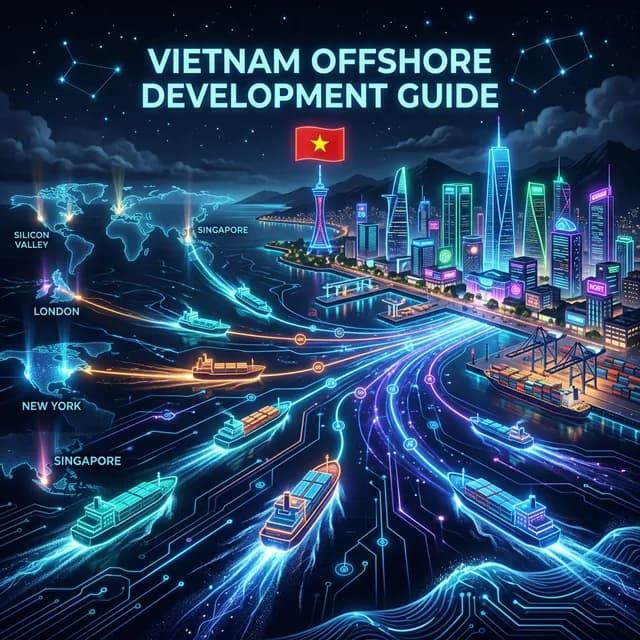
Vietnam is the optimal offshore development destination for Japanese companies. Costs are one-third to one-quarter of Japan's rates, the time difference is just 2 hours, diligent engineers are plentiful, and Japanese-speaking project managers are available. Combine this with AI-powered development methods, and you get higher quality and faster delivery than traditional offshoring.
Japan's DX Push and the Vietnam Connection
Since METI's "2025 Digital Cliff" warning, Japanese companies have accelerated their digital transformation (DX) initiatives. But Japan's domestic IT talent shortage is severe, with projections of up to 790,000 unfilled positions by 2030.
Vietnam offshore development is a practical solution to this talent gap. Vietnam's universities graduate approximately 50,000 IT professionals annually, many of whom study Japanese. Hanoi and Ho Chi Minh City host hundreds of development centres serving Japanese clients, staffed with engineers who understand Japanese quality standards.

Cost Comparison: Three Options
| Development model | Hourly rate | 3-month project (2 devs) | Quality | |---|---|---|---| | Japan domestic | $55-$105/hr | $52,800-$100,800 | High | | Vietnam traditional offshore | $25-$45/hr | $24,000-$43,200 | Medium-High | | Vietnam AI-powered (FastDX) | $15-$30/hr | $14,400-$28,800 | High |
AI-powered development uses AI tools for code generation, test automation, and documentation, achieving 40-60% cost reduction compared to traditional offshoring.
6 Reasons Japan Chooses Vietnam
1. Only 2 hours time difference
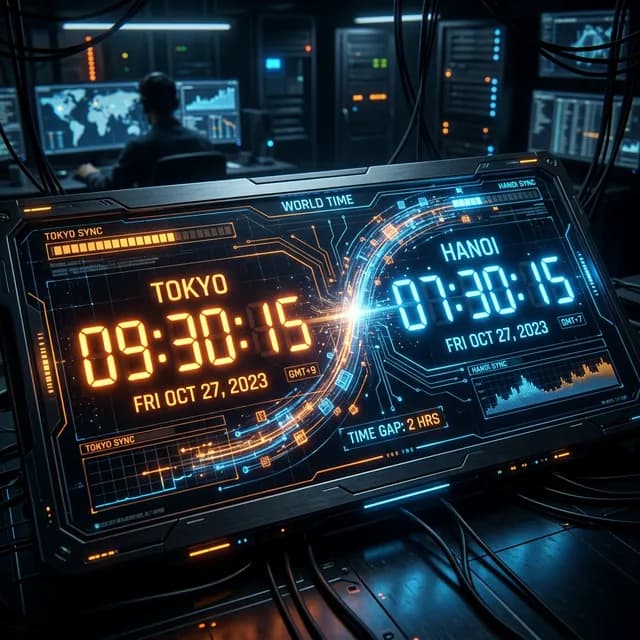
The time gap between Japan and Vietnam is just 2 hours. Morning meetings can include Vietnamese teams, and deliverables can be reviewed the same afternoon. Compared to India or Eastern Europe, real-time communication is dramatically easier.
2. Diligence and quality consciousness
Vietnamese engineers are known for their attention to detail and thoroughness. Many understand the Japanese concept of "horenso" (report-contact-consult) and adapt well to Japanese-style project management.
3. Cost performance
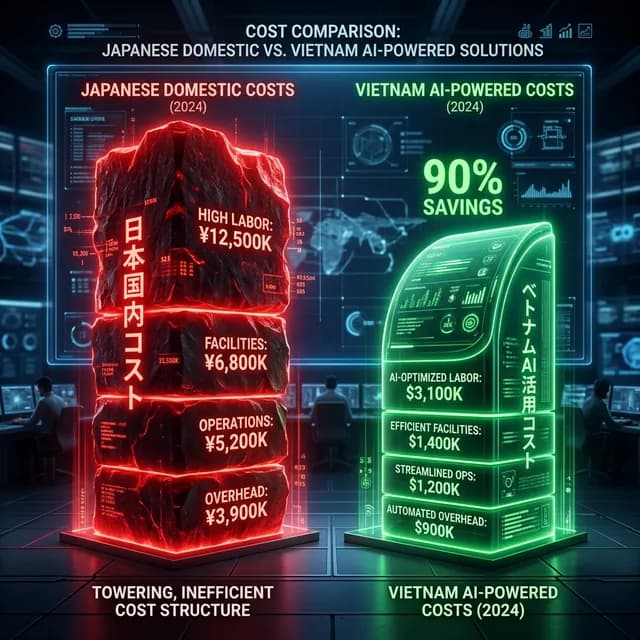
Development at one-third to one-quarter of Japanese rates with equivalent quality. Lower office rent, labour costs, and infrastructure costs all translate directly into development savings.
4. Abundant IT talent
Approximately 60% of Vietnam's population is under 30. With 50,000 IT graduates annually, the talent pipeline is stable. Engineers skilled in Java, Python, React, Node.js, and other stacks demanded by Japanese companies are readily available.
5. Japanese language capability
Hanoi and Ho Chi Minh City have numerous Japanese-speaking PMs and Bridge SEs (BrSE). Engineers with JLPT N2-N1 level proficiency are growing in number, reducing communication barriers year over year.
6. Geographic proximity
Tokyo to Hanoi is approximately 5.5 hours by air. When on-site visits are needed, access is convenient, and being within the same Asian region provides an added sense of security.
Communication Framework
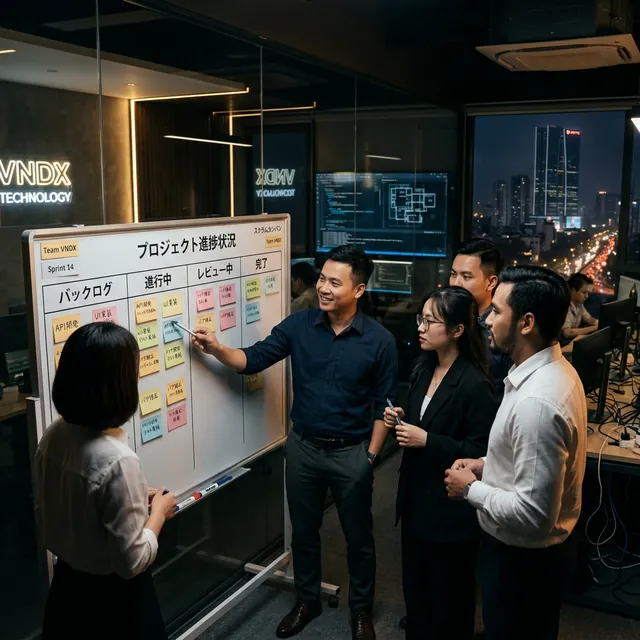
Successful offshore development hinges on communication. FastDX provides the following as standard.
Japanese-speaking PM: Project managers at JLPT N2 or above. All communication from requirements to delivery in Japanese.
Daily standups: 15-minute online morning meetings for progress tracking. Early detection and resolution of issues.
Overlap hours: Japan time 10:00-17:00 (Vietnam time 8:00-15:00) as shared working hours. Real-time Q&A throughout the day.
Tools: Slack, Teams, Backlog, Jira, or whichever tools the client already uses.
Quality Assurance Process
Code review
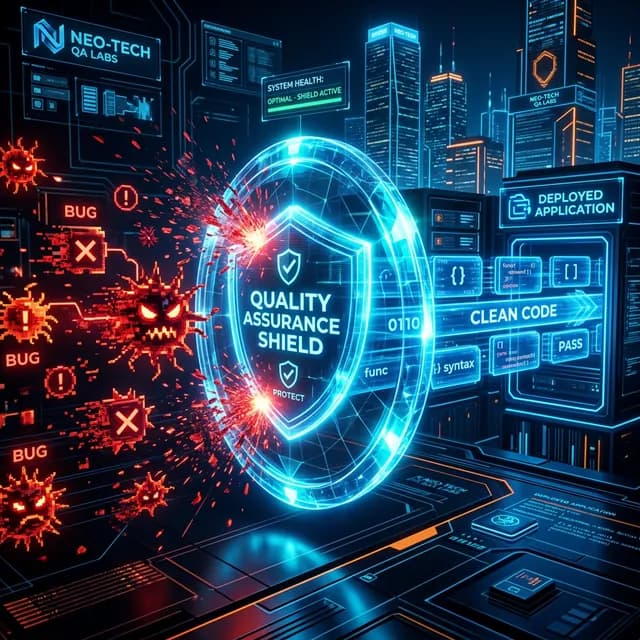
All code passes through review by at least two engineers before merging. AI-assisted code analysis tools are also used to detect bugs and security risks early.
Testing
Three-tier testing: unit tests, integration tests, and E2E tests. 80%+ test coverage as standard, with automated execution via CI pipeline.
Documentation
Design documents, API specifications, and operation manuals created in Japanese. Deliverables conform to quality standards expected by Japanese system integrators.
Risk Mitigation
Intellectual property (IP) protection
- NDAs signed with all staff members
- Source code ownership belongs to the client (explicitly stated in contracts)
- Access only via VPN
- Separation of development and production environments
Data security
- Security policies aligned with ISO 27001
- Personal data handling compliant with Japan's Privacy Mark standards
- Cloud environments in client-specified regions (Tokyo, Singapore, etc.)
Typical Project Examples
| Project | Timeline | Estimated cost | Team | |---|---|---|---| | Business web app (CRUD) | 3-4 weeks | $8,000-$17,000 | PM + 2 engineers | | Internal management system | 4-6 weeks | $14,000-$28,000 | PM + 2-3 engineers | | E-commerce site | 6-8 weeks | $24,000-$42,000 | PM + 3 engineers + designer | | AI chatbot implementation | 2-4 weeks | $7,000-$17,000 | PM + 1-2 AI engineers | | Legacy system modernisation | 8-12 weeks | $35,000-$105,000 | PM + 3-5 engineers |
Getting Started
Vietnam offshore development is one of the most practical and effective options for Japanese companies pursuing DX. It delivers not just cost savings, but faster development, access to the latest technologies, and quality improvement through AI.
FastDX offers a free 30-minute consultation to understand your project requirements and propose the optimal development structure and cost estimate. Get in touch to start the conversation.