The Vietnam Business Context
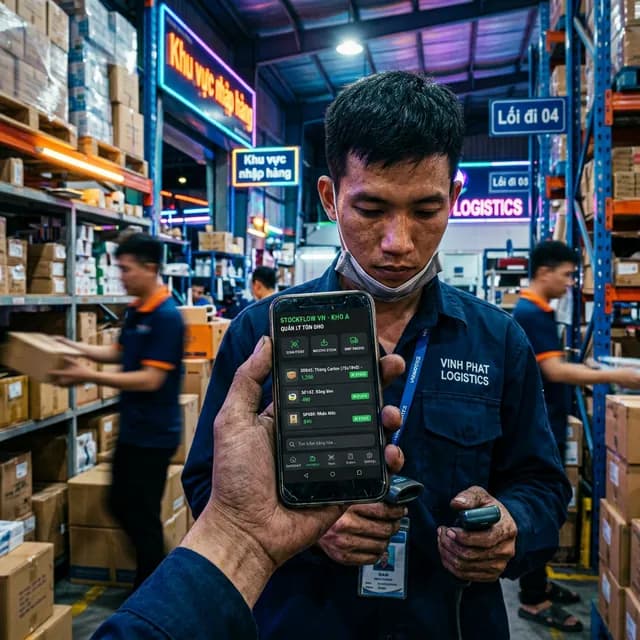
Vietnam has one of the fastest-growing economies in Southeast Asia, but digital transformation here follows its own logic. Many businesses are family-owned or founder-led, decisions move through personal relationships rather than formal processes, and "the system" often means a trusted person rather than software.
The scale of the opportunity is significant. Vietnam's GDP grew 6.5% in 2024, with over 900,000 registered enterprises. Yet according to Vietnam's Ministry of Information and Communications, only 30–35% of SMEs have adopted any form of digital tools beyond basic email and spreadsheets. The government's National Digital Transformation Programme targets 50% SME digital adoption by 2025, creating a $2–3 billion market for digital solutions.
This context matters enormously for how technology gets adopted, and why many off-the-shelf solutions fail.

The Mixed Digital-Paper Reality
Walk into most Vietnamese SMEs and you'll find a fascinating mix. The finance team uses Excel religiously. Zalo groups coordinate sales reps in real time. Printed invoices and handwritten ledgers sit alongside cloud-based tools. Bank transfers coexist with cash-in-hand payments.
This isn't backwardness, it's a rational response to a business environment where digital infrastructure has evolved rapidly but unevenly. Trying to go fully digital overnight without understanding these workflows creates resistance, not progress.
Zalo-First Communication
Any digital tool that ignores Zalo in Vietnam is already fighting uphill. Zalo is where Vietnamese business actually happens: order confirmations, supplier updates, team coordination, customer service. It's WhatsApp, but stickier and more business-oriented in the local context.
Effective digitisation in Vietnam either integrates with Zalo or doesn't ask people to leave it. Building a separate chat or notification system and expecting staff to switch is rarely successful.

What Digitisation Actually Looks Like Here
The most successful digital transformations in Vietnamese SMEs follow a pattern:
Start with a specific pain, not a grand vision. "We lose track of which orders have been delivered and which are pending" is a better starting point than "we want a full ERP system." Solve the immediate problem first.
Respect the paper-to-digital bridge. Some staff prefer paper. Building a system where digital and paper can coexist during the transition period reduces resistance dramatically.
Prove ROI in the first 30 days. Vietnamese business owners are pragmatic. Abstract promises of "digital maturity" don't land. Show a time saving, an error rate drop, or a cost reduction in the first month.
Design for mobile-first. Vietnam has 78 million smartphone users (79% of the population) and mobile internet penetration of 72%. Most operational decisions in Vietnamese businesses happen on phones, not desktops. If your tool doesn't work well on a mid-range Android (70% of the market, typically $150–$300 devices), it won't be adopted.

Language and Locale Considerations
Software in English only is a barrier, but badly translated Vietnamese is worse. Vietnamese has regional dialects and tonal variations that affect how formal or informal software feels. Northern Vietnamese differs from Southern Vietnamese in vocabulary and register, an app that feels stiff and formal in Hanoi might feel natural in Ho Chi Minh City, or vice versa.
The best-adopted tools are those that feel like they were written by a Vietnamese person, not translated by a machine.
The Path Forward
Vietnam's digital transformation is happening, fast. The opportunity for businesses is to adopt tools that fit the way Vietnamese organisations actually work, rather than trying to make Vietnamese organisations work like the use-cases those tools were originally designed for.

The businesses that will win are those that get practical tools deployed quickly, prove value early, and build trust with their teams before scaling.
Vietnam Digital Transformation: Key Numbers
| Metric | Value | |---|---| | GDP growth (2024) | 6.5% | | Registered enterprises | 900,000+ | | SME digital adoption rate | 30–35% | | Smartphone penetration | 79% (78M users) | | Zalo monthly active users | 76 million | | Average developer salary (Vietnam) | $12,000–$24,000/year | | Average developer salary (US/EU) | $80,000–$150,000/year | | Cost advantage for Vietnam-based development | 60–80% lower | | Government digital transformation budget (2021–2025) | $1.8 billion | | E-commerce growth rate | 25% year-over-year |
For businesses looking to build custom tools with a Vietnam-based team, the cost advantage is substantial. A project that costs $100,000–$200,000 with a US or European development team typically costs $20,000–$50,000 with an equally skilled Vietnamese team, without compromising on quality.