The Challenge
Saigon Bowl grew from a single food stall to a 6-location fast-casual chain in 5 years. The owner's passion for Vietnamese cuisine drove the expansion, but the technology couldn't keep up.
The Frankenstein Tech Stack
Each location had evolved its own setup:
- 3 different POS systems – Each location used a different setup: some with cloud-based POS systems, some with local POS providers, and one still relied on a basic cash register with handwritten tickets
- 3 delivery platform tablets – UberEats, DoorDash, and Menulog each required separate tablets, with orders manually entered into the POS
- Phone orders written on paper and passed to the kitchen
- No central system connecting any of it
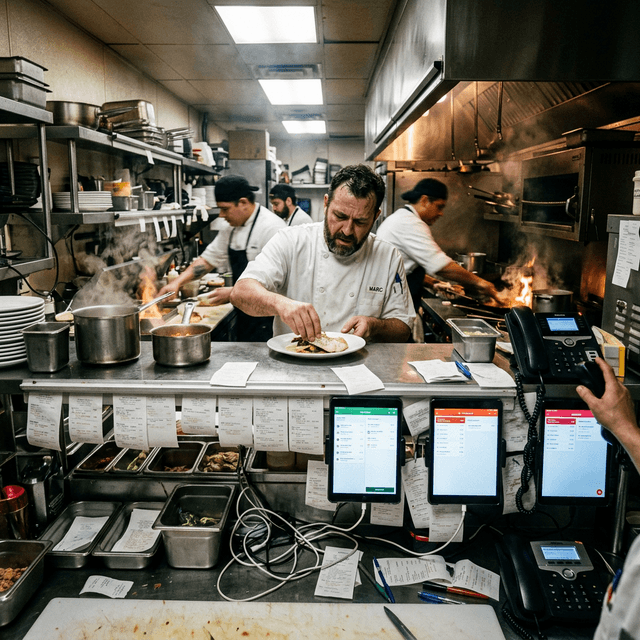
Kitchen Chaos During Peak Hours
Between 11:30am and 1:30pm, kitchen staff juggled orders from multiple sources:
- Paper tickets from the POS
- Three different delivery app tablets beeping simultaneously
- Phone orders scribbled on notepads
- Dine-in modifications shouted across the kitchen
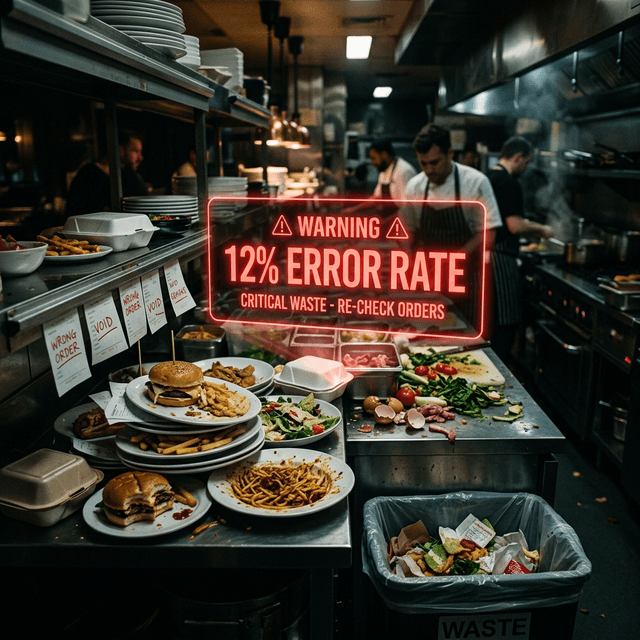
The result: 12% order error rate – mostly missed modifications like "no bean sprouts" or "extra chili." Each error cost $8-$15 in remade food, customer dissatisfaction, and delivery platform rating hits.
The Food Waste Crisis
With no demand forecasting, kitchens prepared broth and ingredients based on the head chef's gut feeling:
- 18% food waste rate – $156,000/year thrown away
- Some days, popular items sold out by 7pm
- Other days, $400+ of prepared stock went to waste
- Broth preparation (which takes 8 hours) was pure guesswork
Invisible Customers
Despite thousands of loyal regulars across 6 locations:
- Zero customer records – no way to identify repeat visitors
- No loyalty program, no email list, no way to bring people back
- Customers visiting multiple locations were completely invisible
- No data on what people actually ordered or how often they returned
Enterprise Solutions: Wrong Fit, Wrong Price
Leading enterprise restaurant management solutions quoted $1,200-$2,500/month for 6 locations plus $30,000-$60,000 implementation. They also required replacing all POS hardware simultaneously – a $40,000+ additional investment.
The Solution
Instead of a costly rip-and-replace, FastDX built a platform that connected to Saigon Bowl's existing systems.
Week 1: Unified Order Pipeline & Kitchen Display
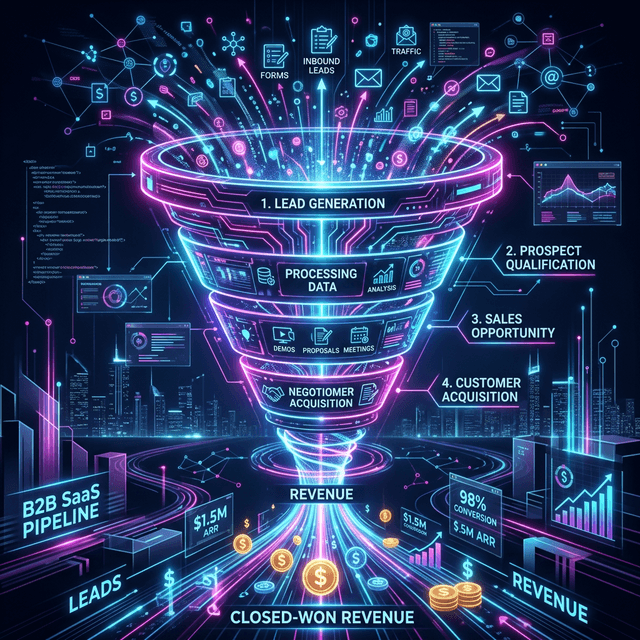
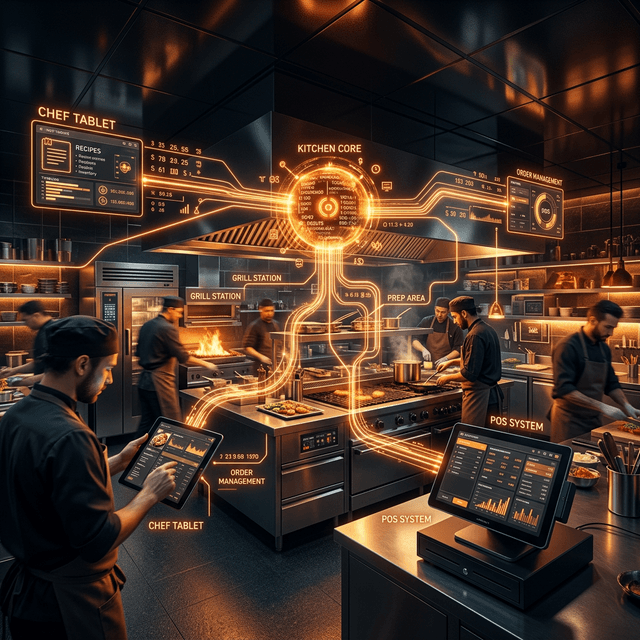
- Middleware layer that ingests orders from all sources (3 POS systems + 3 delivery platforms + phone) into a single, prioritized queue
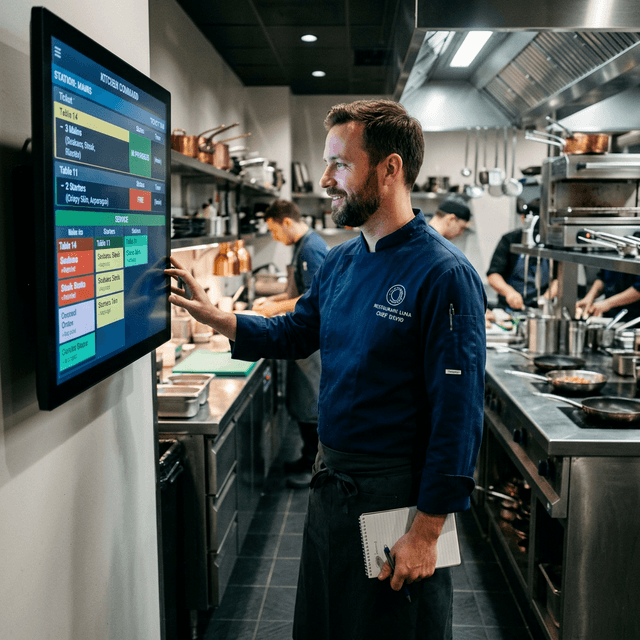
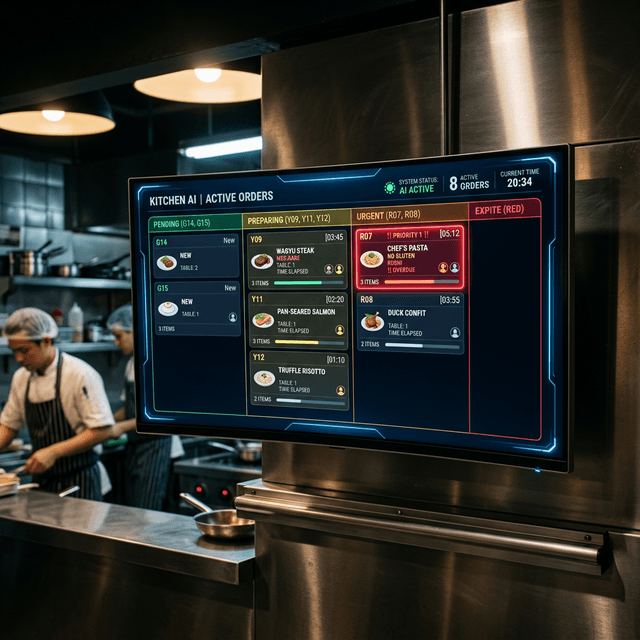
- AI-powered Kitchen Display System (KDS) that:
- Prioritizes orders by complexity, cooking time, and promised delivery time
- Groups all items for a dine-in table to fire together
- Highlights modifications with clear visual alerts (allergy items in red)
- Shows real-time cooking timers and order status
- Automatic order routing – delivery orders separated from dine-in, with different priority rules
Week 2: AI Demand Forecasting & Inventory
- Demand prediction model trained on 2 years of POS sales data combined with:
- Weather forecasts (rainy days = more delivery orders)
- Day-of-week patterns (Friday lunch rush 40% higher than Monday)
- Local events (nearby sports matches, public holidays, school terms)
- Seasonal ingredients (seasonal specials tracked automatically)
- Automated prep sheets generated each morning: "Location 3 needs 45L pho broth, 12kg beef, 8kg chicken today"
- Ingredient-level tracking with automatic supplier reorder triggers
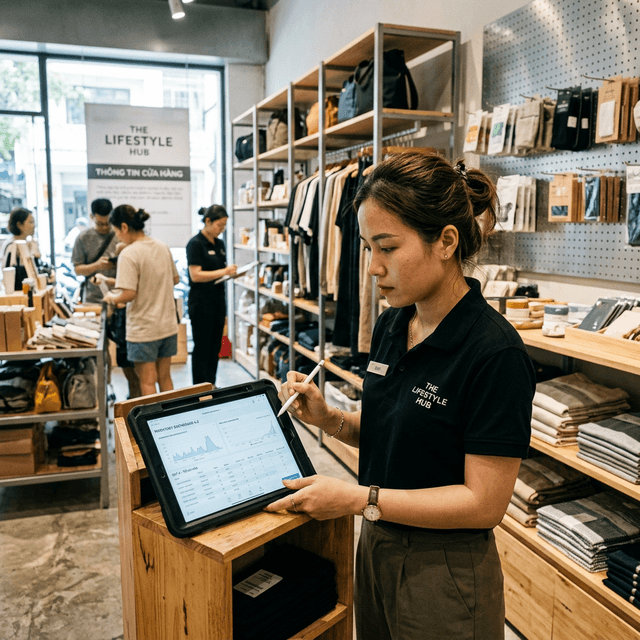
- Waste monitoring dashboard showing actual vs. predicted consumption
Week 3: Customer Intelligence & Loyalty
- Unified customer profiles matched across all 6 locations by phone number or email from delivery apps and in-store orders
- AI-generated segments: "weekly regulars," "lunch-only," "delivery-heavy," "lapsed (30+ days)"
- Digital loyalty program: earn points across all locations and channels
- Automated personalized campaigns: "Hi David, your usual Pho Bo is waiting – 2x points this Thursday at our Surry Hills location"
- Menu performance analytics: which items drive repeat visits, which have high waste, which should be promoted
Before vs. After
| Metric | Before | After (3 Months) | |--------|--------|-------------------| | Order error rate | 12% | 2.1% | | Food waste (% of food cost) | 18% | 7.5% | | Food waste savings | – | $91,000/year | | Average ticket time (peak) | 18 min | 11 min | | Delivery order entry | Manual (3 tablets) | Automatic (single queue) | | Customer database | 0 records | 14,200 profiles | | Repeat visit rate | Unknown | 52% (loyalty members) | | Loyalty revenue uplift | – | +$8,400/month | | Schedule planning time | 6+ hrs/week | 45 min/week | | Staff overtime costs | $4,200/month | $1,800/month |
The Results
The impact was felt immediately across all 6 locations:
- Order errors dropped 83% – from 12% to 2.1%, with kitchen staff praising the clear KDS display
- Food waste cut by 58% – AI demand forecasting replaced gut-feeling prep decisions, saving $91,000/year
- Peak hour throughput increased 39% – average ticket time dropped from 18 to 11 minutes
- 14,200 customer profiles built in 3 months (from zero) – loyalty members showing 52% repeat rate
- $8,400/month revenue uplift from targeted loyalty campaigns
- Delivery platform ratings improved across all three apps – fewer errors mean fewer refunds and better reviews
- Kitchen staff morale improved – less chaos, clearer priorities, fewer remakes
The Human-AI Balance
The AI doesn't try to run the kitchen – it gives the kitchen team better information to work with:
- Chefs still decide how to cook, when to adjust recipes, and how to handle special requests
- AI handles the data – order prioritization, demand forecasting, inventory tracking, customer segmentation
- The KDS is a tool, not a boss – it suggests order priority, but kitchen staff can override it
- Prep sheets are recommendations – head chefs review and adjust based on their expertise
This approach got buy-in from kitchen staff who were initially skeptical about "computers telling them how to cook."
Client Feedback
"During lunch rush, my kitchen used to feel like a war zone – tickets everywhere, tablets beeping, people shouting. Now there's one screen, one queue, and everyone knows what to cook next. The AI doesn't cook the pho, but it makes sure we cook the right amount."
– Owner & Head Chef
Key Takeaway
Restaurant technology doesn't have to mean ripping out everything and starting over. AI-powered vibe coding can connect your existing systems, add intelligence on top, and deliver results in weeks – not months. Saigon Bowl's $40,000 investment saves $91,000/year in food waste alone, while the loyalty platform and operational improvements generate an additional $100,000+ in annual value. Total first-year ROI: over 4x.